
As El Niño Strengthens, CRF Establishes Second In-Water Coral Gene Bank to Safeguard Irreplaceable Genetic Diversity
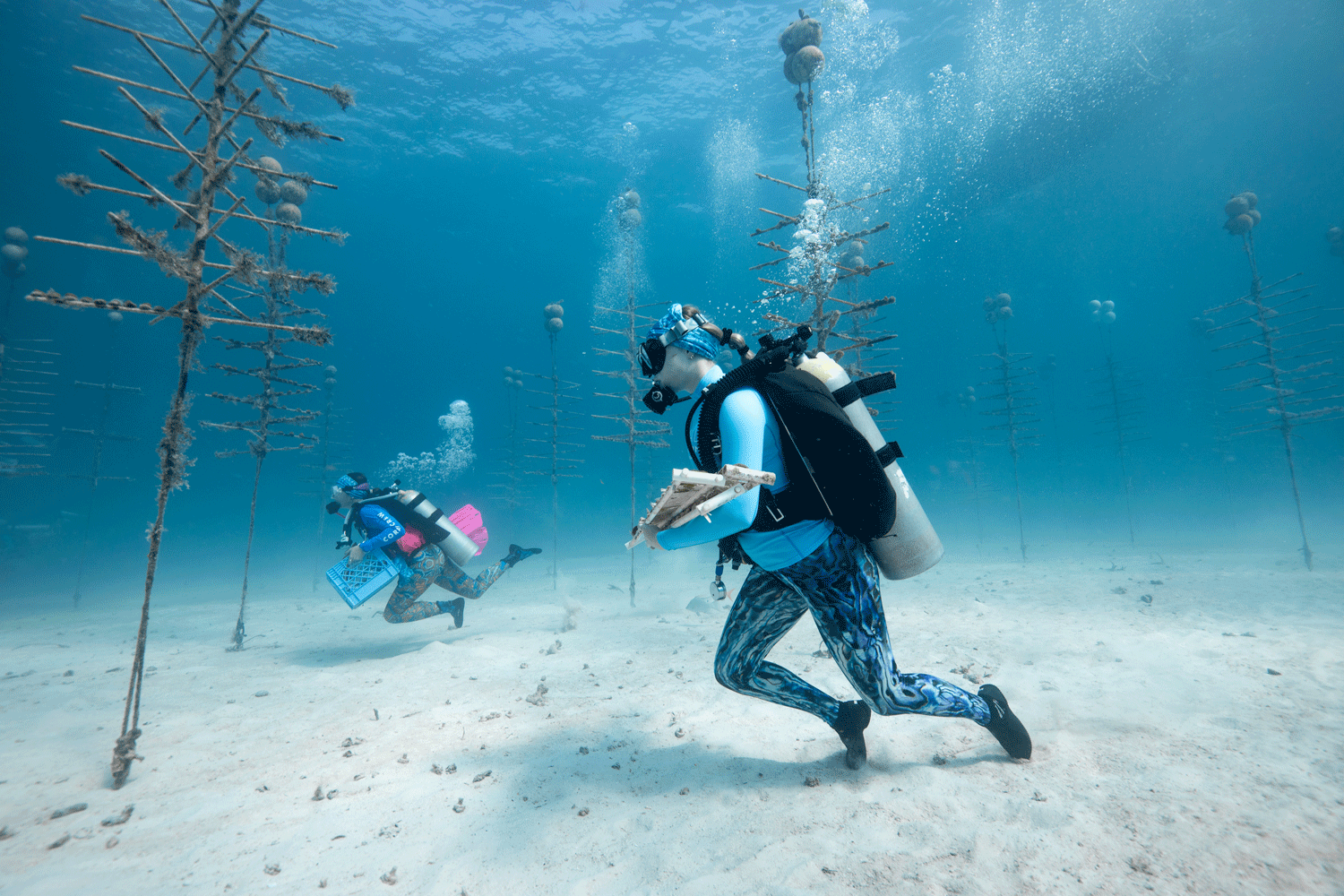
A CRF diver walks trays of boulder corals across the ocean floor ready for relocation to the second CRF ocean based gene bank (Photo Credit Ashley Zeitchick for Coral Restoration Foundation)
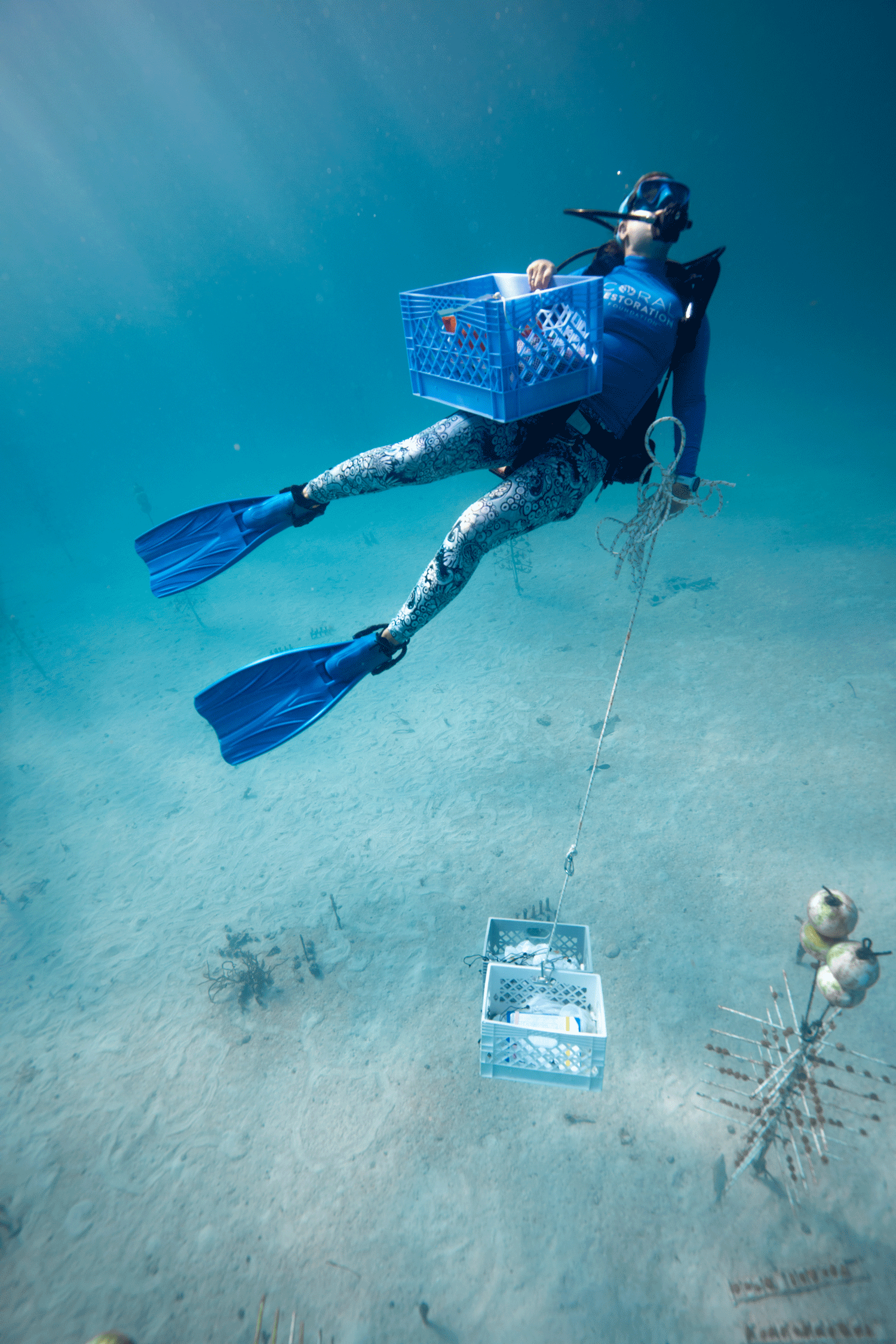
A CRF diver ascends through the water column with crates of founder coral genotypes (Photo credit Ashley Zeitchick for Coral Restoration Foundation)
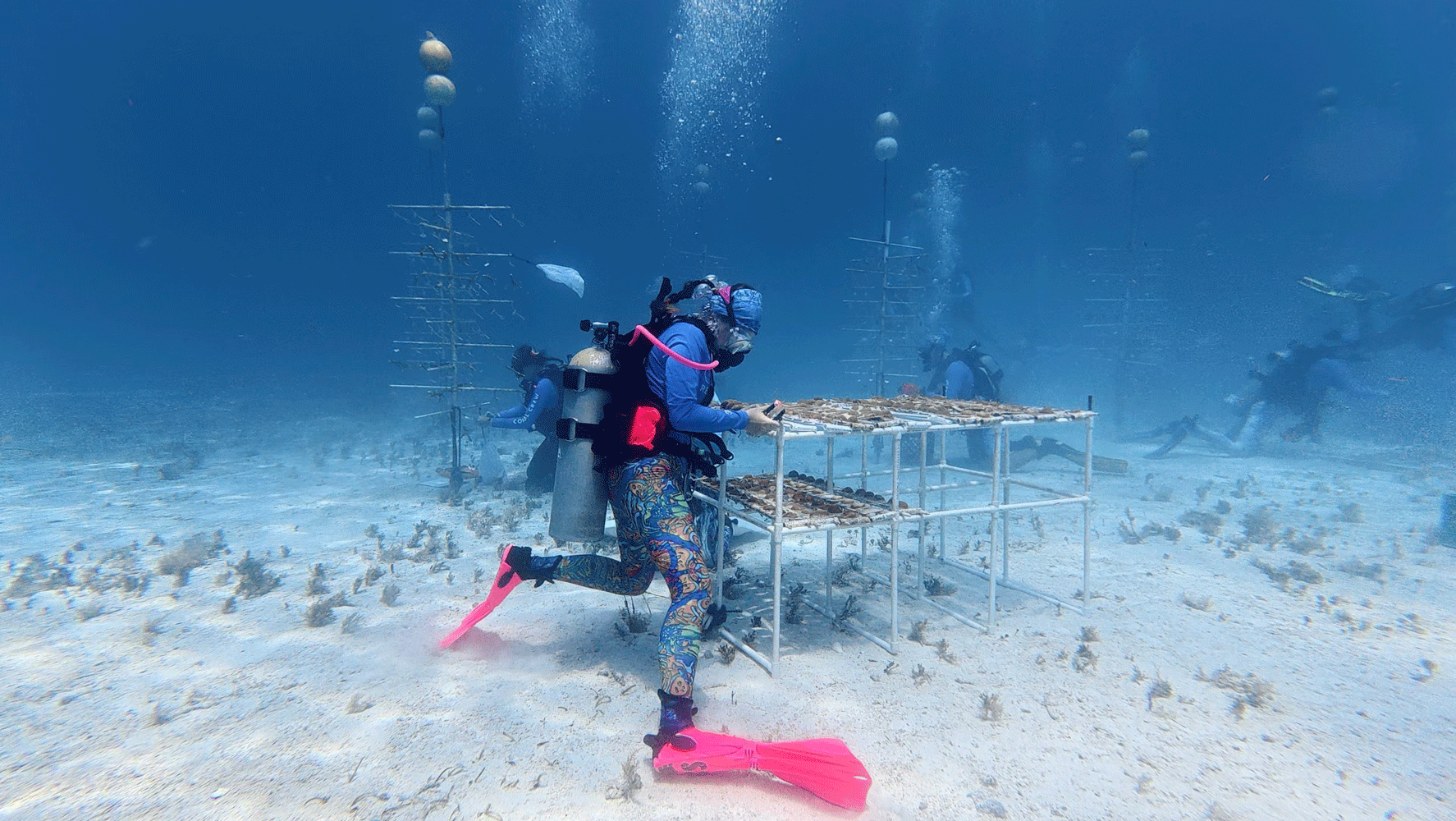
Installing boulder corals in the second CRF gene bank at Elbow Reef (Photo Credit Ashley Zeitchick for Coral Restoration Foundation)
CRF has begun the replication of its in-water genetic bank across two ocean-based sites as Florida’s reefs face potential severe heat stress through 2027
CRF has established a second in situ gene bank at its Elbow Nursery, moving approximately 1,000 corals representing 130 genotypes from Tavernier Nursery across two coordinated dives. The transfer is the first phase of a larger effort to move approximately 3,500 corals to Elbow, ultimately creating a complete in-water replication of the genetic diversity CRF maintains at Tavernier.
This first group prioritised founder genotypes of Acropora cervicornis (staghorn coral) and Acropora palmata (elkhorn coral) from Florida’s Coral Reef, along with most of CRF’s Orbicella corals. Founder genotypes are the original, genetically distinct corals sourced from wild Florida Reef populations that form the genetic foundation of CRF’s nursery population. Preserving them helps safeguard the genetic diversity represented across the wider collection. Additional transfers may take place in the coming weeks depending on how heat stress progresses across the Florida Keys.
The move is part of the CRF bleaching response plan and a deliberate bet-hedging strategy: important genetic stock should not depend on conditions at a single in-water site.
CRF now maintains in situ gene banks at both Tavernier and Elbow Nurseries, complementing land-based genetic banking at The Reef Institute in West Palm Beach.
The need for this level of redundancy is not theoretical. In 2023, Florida was ground zero for the Fourth Global Bleaching Event, and experienced the most widespread coral mortality on record. Around the Florida Keys and Dry Tortugas, researchers documented mortality of 98 to 100 percent among wild elkhorn and staghorn corals. A 2025 NOAA-led study published in the journal Science characterised those losses as the functional extinction of the two species from Florida’s Coral Reef — meaning their wild populations had become too depleted to continue performing their ecological role.
Now extreme heat is building again.
NOAA Coral Reef Watch currently places the Florida Keys in the old Bleaching Alert Level 2, where mortality of heat-sensitive coral species becomes likely. However, the Degree Heating Week (DHW) index for the Florida Keys as of August 17 has reached 14.44°C-weeks. The DHW index combines both the intensity of unusually warm water and how long that heat persists. After the unprecedented 24 DHW experienced in Florida in 2023, NOAA had to modify its bleaching alert scale, extending it to Alert Level 5. Under this new scale and with 14.44 DHW, the Florida Keys is now into Alert Level 3, which represents an increase in the risk of reef-wide multi-species mortality.
And the concern may extend beyond this summer. NOAA says El Niño is strengthening, with a greater than 90% chance that it will become a very strong event during fall and winter 2026–27. There is currently a 69% chance that its strength between October and December will exceed that of previous El Niño events in the record dating back to 1950.
El Niño develops in the tropical Pacific, but its effects can reshape weather and ocean conditions around the world. It does not guarantee another severe bleaching event in Florida. What it does add is uncertainty — at a time when Florida’s remaining coral populations are already profoundly depleted. For CRF, that is reason enough to prepare.
“We saw in 2023 how much genetic diversity can disappear in a single summer,” said Dr. Phanor Montoya Maya, CRF Restoration Program Manager, “We cannot control the temperature of the ocean. But we can reduce the risk of losing important genetic stock. This is about preserving options — because once genetic diversity is gone, we may not be able to get it back.”
Elbow Nursery provides geographical redundancy, but it also offers a different environment.
The site experiences greater water movement than at our Tavernier Nursery site. That matters because water flow can influence the conditions immediately surrounding a coral, increasing exchange with the surrounding seawater and, under some circumstances, reducing the physiological impacts of heat stress. Research has found that higher-flow environments can lessen some damaging effects of elevated temperature, although flow is only one of many factors governing whether a coral bleaches or survives.
There is also an intriguing observation already at Elbow Reef, the reef nearby that gives name to CRF’s alternative nursery: Acropora palmata (elkhorn coral) at the site survived previous bleaching events, including the Fourth Global Coral Bleaching Event.
CRF does not yet know whether the corals moved from Tavernier Nursery will respond in the same way. That is part of what makes the new site valuable. By maintaining genetic stock under different environmental conditions, CRF can monitor how species and individual genotypes perform at each nursery over time. The primary purpose of Elbow Nursery is redundancy, but if conditions there also prove to offer some protection during heat stress, it would provide valuable information for future nursery management.
Getting the corals to Elbow Nursery required a major coordinated effort. Around 29 divers and four boats took part. The core transfer team operated from a Rainbow Reef charter vessel, while CRF boats supported operations at the Tavernier and Elbow Nurseries.
Across two dives, approximately 1,000 corals — both Acroporids (staghorn and elkhorn corals) and non-Acroporids, including boulder corals, representing 130 genotypes — were transferred to Elbow.
They are the first of approximately 3,500 corals planned for the new gene bank. The timing of the remaining transfers will be guided by conditions on the reef and the progression of heat stress over the coming weeks.
Now the work shifts from moving them to keeping them healthy. CRF will begin regular nursery maintenance operations at Elbow, monitoring and caring for the corals while tracking their performance through the remainder of this bleaching season and beyond.
Alice Grainger
Coral Restoration Foundation
+1 3054537030
email us here
Visit us on social media:
LinkedIn
Instagram
Facebook
YouTube
TikTok
Legal Disclaimer:
EIN Presswire provides this news content "as is" without warranty of any kind. We do not accept any responsibility or liability for the accuracy, content, images, videos, licenses, completeness, legality, or reliability of the information contained in this article. If you have any complaints or copyright issues related to this article, kindly contact the author above.
