

Paper Salad Bowl with Lid Options for Foodservice Buyers by LvSheng with Custom Printing


Foodservice operators and procurement managers often face significant challenges when sourcing packaging for mixed-menu items like salads. A common supply chain failure occurs when bowls and lids are procured separately without verifying dimensional compatibility, leading to poor rim fit, compromised stacking during transit, and leaks. For buyers seeking a reliable packaging system, evaluating the bowl and lid as an integrated unit is essential for operational efficiency. Finding a capable Wholesale Paper Salad Bowl Supplier requires looking beyond basic unit costs to examine manufacturing precision, material options, and quality control processes. Establishing a standardized procurement framework ensures that takeaway packaging performs reliably under the physical demands of commercial food delivery.
Comparing White and Kraft Paper Salad Bowl Options
The foundational decision in building a salad packaging program is selecting the appropriate base material. Suppliers typically categorize these products into distinct white and kraft lines, each serving different brand positioning and functional requirements. A white paper salad bowl offers a clean, neutral background that highlights the vibrancy of fresh ingredients, making it a standard choice for modern fast-casual environments. Conversely, kraft paper bowls communicate a more rustic, environmentally conscious aesthetic that aligns with natural or organic menu concepts.
LvSheng supports both presentation styles through its dedicated white paper bowl and kraft paper bowl production lines. The company's product catalog includes white paper salad bowls paired with plastic lids, alongside custom printed takeaway salad bowls in the kraft category. When reviewing these options, buyers should consider the specific use environment. For instance, while some white salad bowl configurations are described as suitable for microwave reheating, procurement teams must verify the exact temperature limits, required conditions, and whether the accompanying lid must be removed prior to heating. Confirming these specifications through official documentation rather than general assumptions prevents material failure in end-user scenarios.
Matching Bowl Capacity and Rim Dimensions to Menu Portions
Standardizing bowl capacity is critical for maintaining portion control and protecting food margins. A misaligned packaging size either forces kitchen staff to overfill portions to avoid a sparse appearance or leaves excessive empty space that causes ingredients to shift and degrade during transport. Procurement managers must map their specific menu items—ranging from dense grain bowls to lighter leafy salads—to the correct volumetric capacity.
Equally important to the bowl's interior volume is the precision of its rim dimensions. The structural integrity of a takeaway salad container relies heavily on the rolled rim, which dictates how securely the lid attaches. Inconsistent rim forming leads to loose fits, resulting in spills and customer dissatisfaction. Evaluating a supplier's manufacturing capabilities should include a review of their forming equipment and dimensional inspection protocols. Reliable production requires strict adherence to size tolerances, ensuring that every unit within a high-volume run maintains the exact geometry needed for a secure lid seal.
Evaluating Paper, PET, and PP Lid Categories
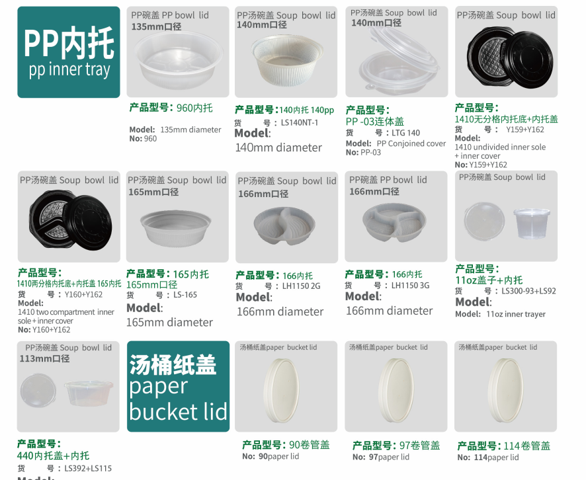
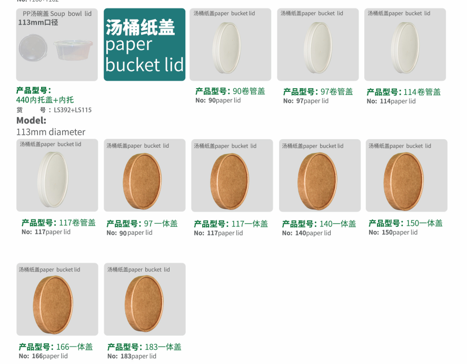
The performance of a salad bowl system depends heavily on selecting the correct lid material for the intended application. Foodservice packaging manufacturers separate lid production into distinct material categories to address different operational requirements. The official product navigation from Xiamen LvSheng Paper & Plastic Products Co., Ltd. highlights a comprehensive approach by offering paper, PET, and PP lid options, along with PS configurations for specific uses.
PET lids are widely favored for cold applications like fresh salads because of their high clarity, which allows immediate visual identification of the contents and enhances presentation in grab-and-go displays. However, PET is generally not suitable for hot-fill or microwave applications due to its lower heat tolerance. PP lids offer superior heat resistance, making them appropriate when the menu includes warm components like grilled proteins or roasted vegetables, though they may provide slightly less optical clarity than PET. Paper lids present a completely different profile, aligning with plastic-reduction initiatives while offering a secure closure, albeit at the expense of product visibility. Buyers must align these material properties with their specific menu temperatures and merchandising strategies.
Lid Fit, Stacking, Visibility, and Takeaway Transport
A successful packaging program must survive the logistical realities of food delivery. Once the bowl and lid materials are selected, the focus shifts to physical performance during handling and transit. Lid fit is the primary defense against leaks and contamination. The connection between the bowl rim and the lid channel must provide an audible, secure snap that resists lateral pressure during movement.
Stackability is another critical metric. In busy kitchens and delivery vehicles, multiple orders are frequently stacked. The lid design must feature a stable nesting groove that matches the base diameter of the bowl above it, preventing crushing or tipping. Visibility remains a factor for order accuracy; clear PET lids allow expeditors to visually verify an order without breaking the seal.
To guarantee this level of performance, rigorous factory-level quality control is mandatory. Evidence of these protocols can be seen in factory inspection routines. For example, video documentation from LvSheng demonstrates a comprehensive quality assurance workflow that includes automated bowl forming, waterproof testing, and precise dimensional inspections. These verified processes provide buyers with the necessary assurance that the final product will perform consistently under commercial transport conditions.
Custom Printing and Artwork Control for Branded Salad Bowls
Takeaway packaging serves as a highly visible mobile billboard for foodservice brands. Transitioning from plain stock items to branded packaging requires a supplier capable of precise custom printing. High-quality artwork execution transforms a standard container into a premium brand touchpoint, reinforcing customer loyalty long after the food has been delivered.
The production of custom printed bowls involves significant technical coordination. Buyers exploring the kraft or white bowl categories must define their artwork requirements early in the sourcing process. This includes understanding the supplier's color limitations, supported file formats, and proofing protocols. A reliable manufacturing partner will offer clear guidelines on safe printing areas and ink compliance for food-contact packaging. By establishing strict artwork controls and requiring physical golden samples before mass production, brands can ensure their logos and color schemes are reproduced accurately and consistently across every batch.
Bowl and Lid RFQ Requirements and Sample Approval
Transitioning from product exploration to active procurement requires a structured Request for Quotation process. To avoid delays and misunderstandings, buyers must provide a comprehensive specification list that covers both the bowl and the matching lid as a unified system.
An effective RFQ should specify the exact bowl capacity, the required base material (white or kraft paper), the specific lid material (PET, PP, PS, or paper), and the anticipated menu temperatures. It must also detail any custom printing requirements, requested volume, delivery destinations, and the necessary compliance documentation for food contact safety. Requesting physical samples for fit and stack testing is a mandatory step before finalizing any contract. By systematically detailing these parameters, foodservice operators can secure a reliable supply chain for their packaging needs. For further details on product specifications and to initiate a custom packaging inquiry, visit the official website at https://lvshengpapercup.com/.
Xiamen LvSheng Paper & Plastic Products Co., Ltd.
LvSheng
email us here
Visit us on social media:
LinkedIn
Facebook
YouTube
X
Legal Disclaimer:
EIN Presswire provides this news content "as is" without warranty of any kind. We do not accept any responsibility or liability for the accuracy, content, images, videos, licenses, completeness, legality, or reliability of the information contained in this article. If you have any complaints or copyright issues related to this article, kindly contact the author above.
